service · Advisory & Program
OT third-party vendor risk
Vendor access with an owner and an expiry
Remote vendor access gets an owner, a window, and an expiry. Hillstrong builds the program. Proof lands as access is granted and pulled.
how the engagement runs
- 01
Vendor Inventory & Risk Map
Working sessions with operations, engineering, procurement, and security. Active OT vendors inventoried. Access types, touchpoints, and known incidents mapped. Critical and emerging vendors named.
- 02
Program Design
Vendor risk policy, RACI, and tiering model designed for OT realities. Access controls, contract language, and onboarding gates defined. Aligned to IEC 62443-2-4 and NIST 800-82r3 expectations.
- 03
Procurement & Operations Integration
Procurement workflow updated. Contract clauses drafted. Vendor onboarding, change, and offboarding procedures written. Training delivered to procurement, OT engineering, and security teams.
- 04
Continuous Oversight Cadence
Quarterly vendor review cadence handed to the program owner. Reporting tied to vendor risk reduction. Executive briefing pack delivered to the sponsor.
who does the work
Led by senior OT practitioners
Engagement lead
Lead assessor
Security engineer and architect
Analyst

An OEM engineer walks into the cell with a USB drive. The procurement form asked only whether the vendor has SOC 2, and the contract says nothing about plant cybersecurity.
This service builds a vendor risk program for OT, aligned to IEC 62443-2-4 and NIST 800-82r3. We inventory active OT vendors, tier them by criticality, and map how each one touches the plant. Then we bring remote access and removable media under control and write cybersecurity terms into contracts and onboarding.
Procurement gets an updated workflow with security gates, and the program owner gets a quarterly review cadence. If you use Resilion, access grants and expiries are tracked there.
Our security engineers can build the remote access controls the program calls for. Vendors on site get their own track in OT security awareness training.
after the engagement
The findings keep moving
Clients who want help running the fixes can put the findings in Resilion, the platform we use to run programs. Each fix gets a named owner at a named site, and the evidence lands as it closes.
See how Resilion works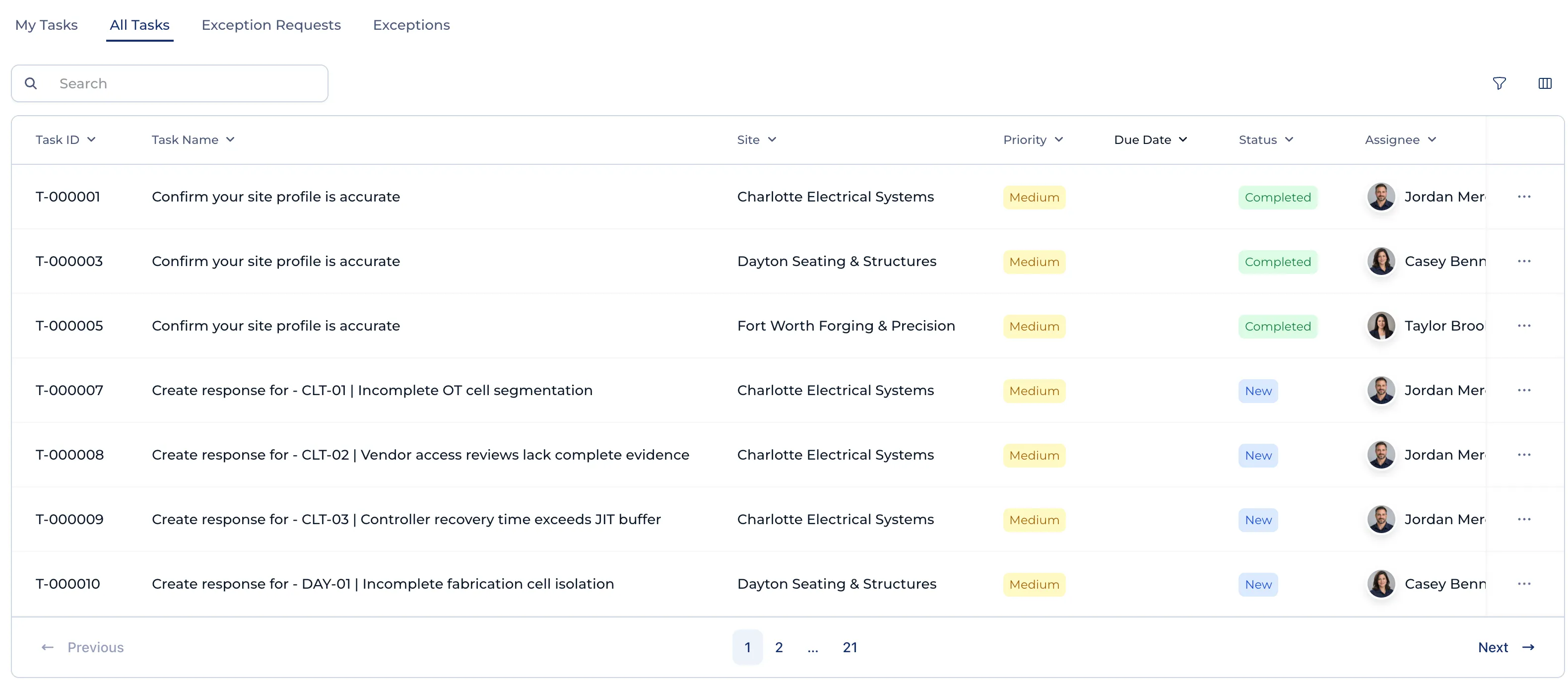
keep reading
Reading on this work
- OT Exceptions, Vendor Access, and Connectivity Expose Whether Governance Is RealA credible OT exception process names a risk owner, documents constraints and compensating controls, sets review dates, and escalates repeat patterns.Read the post →
- How to Communicate OT Risk and Compliance to the BoardBoards fund OT security when audit findings read as business risk. Put a dollar figure on inaction, rank fixes by impact, and shape the message for CFO and CEO.Read the post →
- A Useful OT RACI Starts With Decision Rights, Not DepartmentsA working OT RACI assigns five decisions: enterprise standards, site implementation plans, exception approval, incident authority, and vendor access.Read the post →
FAQ
Questions about OT third-party vendor risk
- Why does OT need its own vendor risk program?
- IT vendor risk asks whether a supplier has SOC 2. It never asks whether the OEM engineer carries a USB into the cell or how remote access is granted and revoked. OT vendor risk governs the ways third parties touch the plant.
- What does the program control?
- OEM and integrator remote access, removable media, on-site engineering practices, and the cybersecurity terms in contracts and onboarding, so each vendor relationship has an owner and enforced rules.
Talk to the people who do this work
Thirty minutes with a senior OT security practitioner. We confirm fit, plant scope, and who should be in the room. If it is not a match, we say so.